
What Is Benedict’s Law? Why It Matters in Children’s Services
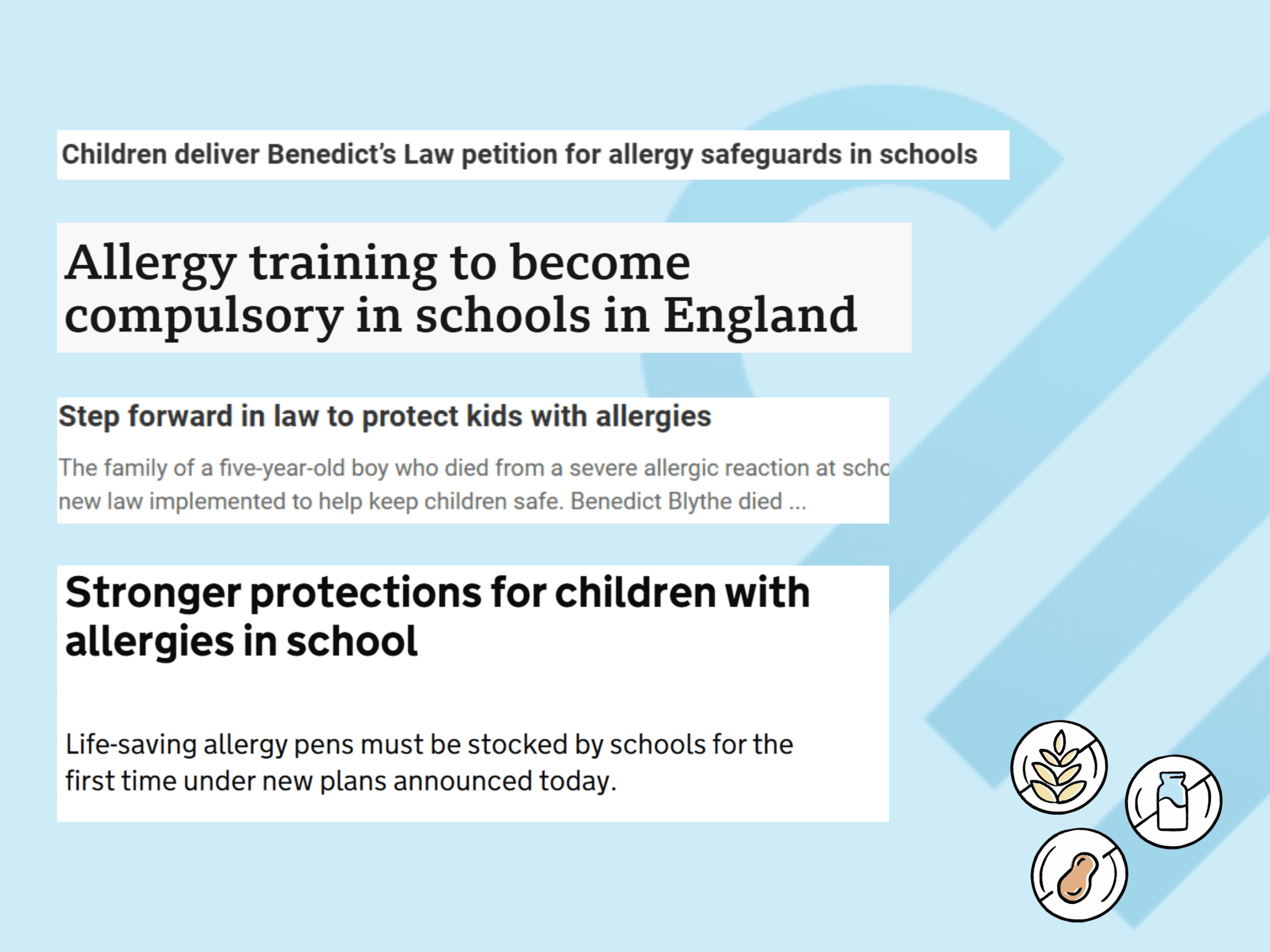
Benedict’s Law refers to the stronger Allergy Safety measures being introduced in Schools following the tragic death of five-year-old Benedict Blythe. It is a response to a heartbreaking case, but it is also a wider call for better awareness, stronger procedures and safer practice where known Health Needs are involved.
Although Benedict’s Law is rooted in Education, the issues it raises are particularly relevant to Children’s Services within Health and Social Care and beyond.
In settings where staff work closely with Children and Young People, knowing how to respond appropriately can play an important part in keeping them safe.
The Tragic Case behind Benedict’s Law
It takes its name from the tragic case of Benedict Blythe, a five-year-old boy who died after suffering a fatal Allergic reaction at School. His death led to calls for stronger protections for Children with Allergies, as well as greater accountability in settings responsible for their Care and Wellbeing.
The Benedict Blythe Foundation was established in his memory and continues to raise awareness and campaign for stronger protections in Schools. Click here to learn more about his story.
More than anything, Benedict’s story brought attention to a deeply important issue. When a Health Need is already known, it cannot be treated as a minor detail. It must be understood properly, communicated clearly and acted on appropriately.
That is what gives Benedict’s Law such significance. It is not only about one case. It is about what that case revealed.
What Benedict’s Law is really about
At the heart, it is about making sure Allergy Safety is taken seriously. It reflects a growing understanding that severe Allergies are not simply Dietary preferences or minor Medical notes. In some cases, they can become life-threatening within minutes.
It is designed to strengthen Allergy Safety in Schools through:
- Clearer Procedures
- Better Staff Preparedness
- Access to emergency Medication
- Access to emergency Adrenaline Auto Injectors (AAIs) where needed
- Individual Allergy Plans
With the updated measures expected to come into force from September 2026, this will also include access to emergency Adrenaline Auto-Injectors (AAIs) where needed, as well as individual Allergy Plans.
Learn more here
Why Benedict’s Law matters beyond Schools
Although Benedict’s Law is focused on Schools, the principles behind it are relevant wherever people rely on others for support. This is particularly important in Children’s Services, where Professionals may be responsible for supporting individuals with Allergies, Medical Conditions and Additional Needs.
In these settings, it is not enough for information to sit in a file or be mentioned in passing. It has to guide practice. It requires informed action.
That is where Benedict’s Law connects so clearly with Health and Social Care.
The Law may not apply to the Sector in the same direct way, but the message behind it certainly does.
Awareness must lead to Action
One of the strongest messages behind Benedict’s Law is that awareness on its own is not enough. People may know a person has an Allergy or Medical Condition, but unless that knowledge leads to the right precautions and the right response, the risk remains.
Safe Practice depends on:
- Knowing what the risk is
- Understanding how serious it may be
- Responding confidently and quickly
Training is an essential part of this approach, helping staff to understand the risks, recognise symptoms and follow Care Plans appropriately. When this does not happen, serious Safeguarding concerns can arise.
What Health and Social Care can take from Benedict’s Law
For Health and Social Care Providers, Benedict’s Law offers a clear point of reflection. It asks an important question: if a risk is known, are staff trained to manage it safely?
Vital Training in areas such as Medication Management, Allergy Awareness, Safeguarding and Risk Awareness helps teams respond appropriately, minimise risk and maintain consistent standards of Care.
Supporting Safer Practice
At CBAT, we provide Training Services across a wide range of Settings, including Children’s Services, where awareness, safe practice and timely response are all essential to keeping people safe.
Whether you are reviewing Training needs within your Organisation or looking to learn more for yourself, our brochure is a helpful place to start.